
What is a CRM system?
At the outset, the most important thing is to analyse your individual needs. It needs to be determined which programme functions will be important - do you need a basic contact management tool or perhaps a sophisticated system with analytical functions? The entire staff team should be involved in the process of selecting the optimal solution and subsequently testing the system - the programme must be intuitive and meet users' expectations. This is the stage of getting to know the individual functions, asking questions and functional tests that do not involve serious or negative consequences.
The implementation of a CRM solution involves several stages:
- system configuration,
- database import,
- staff training on the service,
- handover of the configured system,
- data analysis, observation and verification of performance and improvement.
CRM software - features and opportunities
Modern CRM systems are used as comprehensive software to supervise and support a company's most important business processes. Irrespective of size or industry specifics, a properly implemented CRM significantly improves operational efficiency and customer service quality, and not only in companies associated with production, logistics or transport. Law firms, advertising agencies, insurance companies or consulting firms also like to use CRM to manage long-term customer relationships, monitor project progress and generate reports. CRM is a tool that grows with the company. Small businesses can start with simple solutions and, as the business grows, integrate more advanced modules - marketing automation, personalisation of offers or project management.
Traditional CRM systems often require specialist developer support, both during implementation and when making changes or adapting the system to the company's specific needs. This generates additional costs and prolongs the implementation process. Scalable and flexible CRM system, based on the platform no code, allows applications to be created and modified without the need for programming and coding. The great advantage of such a solution is that changes can be made quickly and as required, and this significantly reduces costs and saves time, while increasing accessibility for smaller businesses. In addition, cloud-based CRM systems provide access to data from any device and anywhere in the world, so enabling sales and customer service teams to be fully mobile.
See also: Archiving system for bank documents - which programme to choose?
How does the CRM system work?
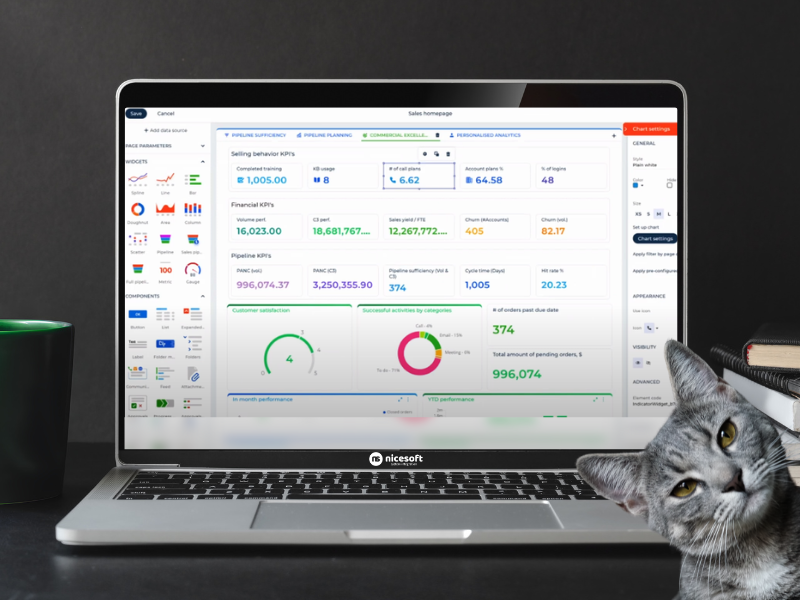
CRM screen source - https://www.youtube.com/watch?v=Czw4d9R60ts
.How does it work? Let's start with the basics, i.e. improving work organisation - instead of scattering customer information in spreadsheets, folders or on separate computers, in CRM you have everything gathered in one place. Employees have easy access to data at any time, and this avoids information chaos. For example - a customer calls to ask about a recent order. Thanks to the CRM, you can check his purchase history in a few seconds, trace the order fulfilment process or check on possible complaints or service requests. A sales person preparing for a conversation with a customer can also check the transaction history in a few moments and adapt the offer to the customer's needs.
Integrating data in one place not only improves communication with the customer, but also helps the various departments of the company to work together. What might working in a CRM system look like? Customer management can be simply divided into several competence zones:
- marketing department creates and tracks campaigns, analyses customer data and conducts automation,
- sales department manages contacts, monitors transactions and forecasts results,
- customer service solves problems, maintains reporting history and builds positive relationships.
The CRM philosophy is based on understanding the needs of customers and gaining knowledge of their preferences, as well as developing an advisory position. CRM systems offer various analytical tools to monitor the effectiveness of marketing, sales and service strategies. The reports generated help marketers to evaluate past activities and select those that are most beneficial - they show, for example, which products are the most popular in a particular region, and this makes it easier to plan a new, effective sales strategy.
How does a CRM system for companies affect customer service?

Working in a CRM system means, above all, better organisation of day-to-day work and long-term benefits in terms of contractor management. The centralisation of data and the automation of processes help to cope with routine duties and favour the implementation of complex projects. At the same time, CRM does not impose one predetermined sales pattern, which will be detached from the sales processes occurring in the company.
A common myth about CRM systems is the belief that they are used to control the operability of salespeople. In fact, the exact opposite is true - the main purpose of CRM is to support sales teams in achieving their goals. These systems streamline and speed up the work of salespeople - relieving them of routine tasks and offering assistance in preparing offers or fulfilling special customer requests.
Read also: Electronic time recording - what is the best programme?
Efficient customer relationship management and the benefits of CRM implementation - summary
Flexible system CRM type no code offers integration with other popular applications (e-mail, calendars, e-commerce or customer service systems) and helps to automatically synchronise information to get a complete picture of customers and their activities. One thing should not be forgotten - ongoing adjustment of strategy based on results is an important part of harnessing the benefits of a CRM system. Only regular data analysis will allow you to identify areas for improvement, optimise business processes and plan marketing strategies more effectively.
Easy and intuitive NiceCRM system - check out our programme!
NiceCRM is a modern customer relationship management system, characterised by its ease of use and intuitive interface. It enables effective contact management, sales automation and advanced analysis and reporting. Thanks to its customisability, it adapts to the needs of different industries, facilitating implementation and daily work. Integration with other systems supports the optimisation of business processes.
 Polish
  English