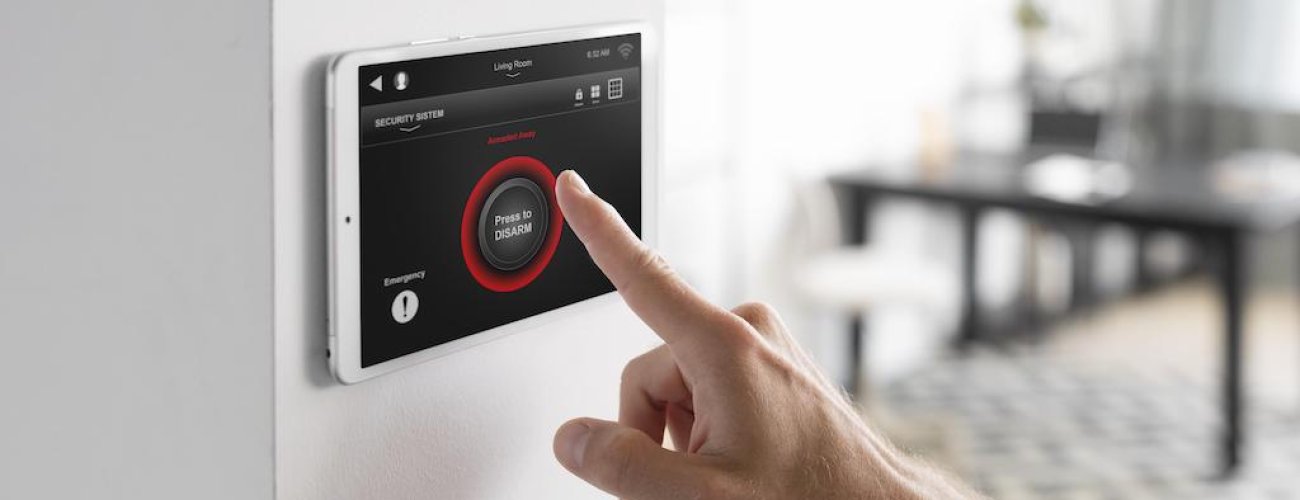
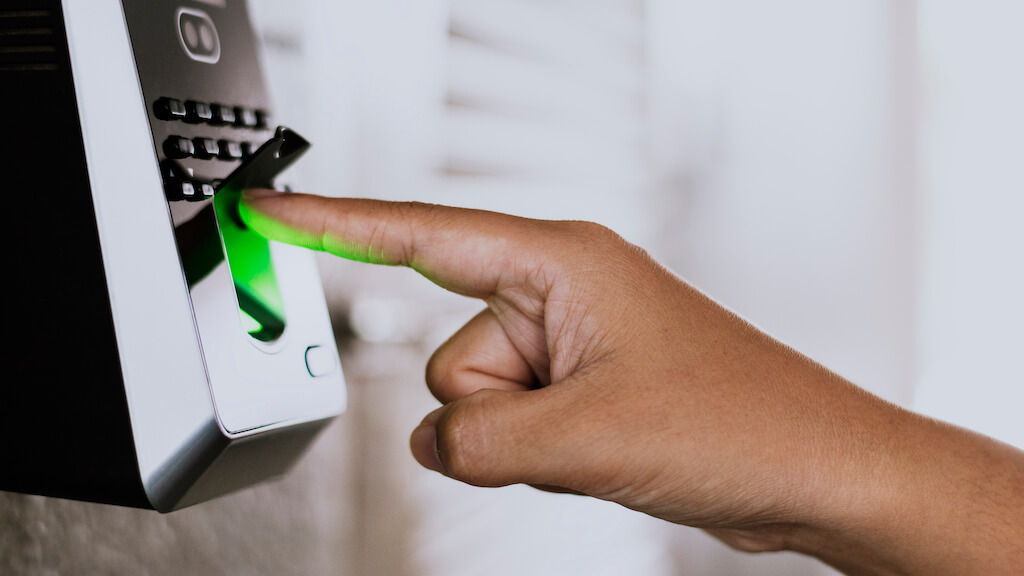
Full control through an electronic access control system - from cards and readers to electric door openers.
It used to be that a security guard with a bunch of keys was enough, who, in the event of an inspection, could have an employee identify himself. Nowadays, in order to minimise human error and misconduct, intelligent solutions are being introduced that access control system used in the past in James Bond films, but nowadays serves to significantly improve the performance of security solutions. With access control systems, access restriction not only makes it possible to effectively secure a facility, but also to quickly respond to emergencies, such as access controllers remotely opening passageways in the event of an emergency and releasing the electromagnetic lock to allow rapid evacuation if a fire is signalled.
The necessary list of components in access control systems includes items such as a biometric reader using a fingerprint, retina and iris readers, RFID tags and doors with magnetic or code locks. A modern access control system creates opportunities for configuration and cooperation with other security systems through the use of compatible solutions, all together to defend access to premises from unwanted visitors. Dedicated software, commonly used in control systems, is created for optimal use and monitoring, recording all events - entries, exits, attempts at unauthorised access to restricted areas and other abuses. Everything is supervised by a single central control unit of the kd system.
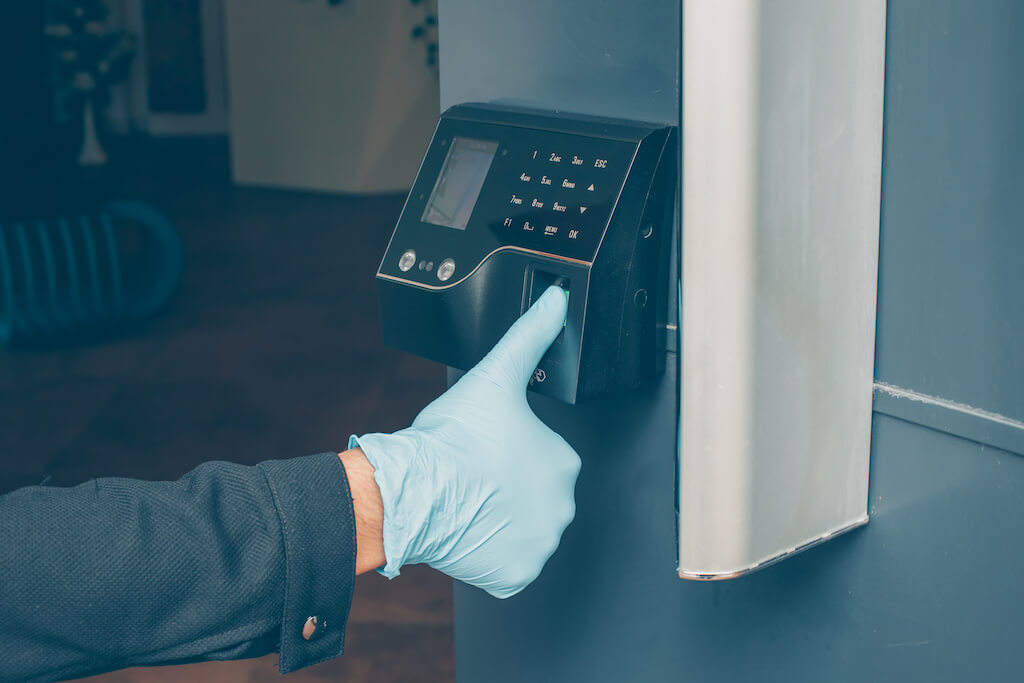
RCP and SKD - monitoring access and working time - how to effectively use the possibilities of both systems?
The access control system is finding its way into more and more applications and can be combined with a time and attendance system using similar operating models. Without a doubt, automatic and precise monitoring of attendance and reporting on lateness makes it much easier to organise work and prepare monthly payments. Time and attendance systems also commonly use proximity cards or biometric readers, so that with a single badge in the form of a magnetic card or a fingerprint sensor, the central access control system monitors and records employee transitions in both directions.
When all the devices are combined, we obtain a coherent system for controlling access for individuals and a time and attendance system, i.e. an intelligent two-in-one solution that significantly optimises security and personnel management, so that it both defends the company's assets and accounts for time fairly for each workstation.
Restricting unauthorised access - software for access control.
In order to grant and change authorisations in a short space of time, it is necessary to have software developed by specialists, working in conjunction with the burglary and robbery alarm system, to control electric locks, guarding the access control of the company and its assets. With this, it is possible to react quickly to deny access to selected protected areas, prevent doors from being opened and block the passage, even if a proximity card or badge has previously enabled the electromagnetic lock to be unlocked. For greater security, various combinations of security devices are used, and their interaction, controlled by the applications and programmes used in access control systems, avoids nervous situations associated, for example, with the triggering of the alarm and the arrival of the intervention team to the protected area.
If you want to effectively defend access to your secrets, valuables or sensitive data, access control via SKD systems can replace a battalion of security guards and caretakers and effectively complement monitoring or traditional alarm systems. Entering a specific area by setting up access rights influences good organisation and employee discipline, and an access control system is designed to watch over this continuously. When designing and setting up the system, it is important to bear in mind that the primary power supply should be separate, and in the event of a power failure, the outage should be signalled - the controller must have a guaranteed power supply.
Biometric reader or badge proximity reader? Advantages of each solution.
The proximity reader, familiar to us even from hotel doors, is a proven and inexpensive solution. It can be opened with a code or without a keypad, using only proximity transponders. Its simple design has a positive effect on low prices, hence its use is a good idea in small companies, offices or institutions. Access control systems do not lose their popularity, allowing efficient entry and exit of employees, without the need to keep track of keys and without the risk of losing or misplacing them. Access to a specific area is gained with an easy-to-remember code that opens the door or with a card that also serves as an identifier.
A biometric reader, using a fingerprint, is much more secure than traditional access codes. Optical sensors that memorise fingerprints work infallibly and protect the most sensitive data, as we are all familiar with from smartphones and laptops, for example. Equally high levels of security are also provided by iris recognition scanners, which identify people instantly, even if they are wearing glasses or contact lenses. They work without contact, so there is an added hygienic advantage, as well as the possibility of placing them in a way that does not allow them to be destroyed, for example behind armoured glass. Identification of persons on this basis is useful wherever security is of particular concern - secret documents, company vaults or local server rooms will be well protected by such access control devices.
Magnetic door lock and exit button - what should I look for when selecting them for my SKD access control system?
Magnetic locks, thanks to their operating principle, offer long periods of correct mechanical functioning, so they are ideal where doors are frequently opened and closed. Cipher versions unlock after entering a code or approaching a card, giving an electric impulse to the electric door strike, which operates on the principle of a normally open contact. When choosing such a model, it is worth paying attention to whether it can work with a door-opening sensor, whether it has a large event memory and the ability to add more codes, and a robust protective housing - all of which can be read in the pdf file of the instruction manual. In older, traditional models, it works by unlocking itself after entering the correct sequence of digits, setting the latches so that the handle can be pressed.
Nhe exit buttons are an essential part of any professional access control system. Pressing them is necessary to leave the protected area, temporarily unlocking the door for the duration of the passage. Before making a choice, attention should be paid to the material it is made of, the mounting method, the contacts supported and the current carrying capacity. Aesthetics play a significant role here, fortunately the multitude of variants on offer will allow you to match your requirements - a small, discreet round button, or a larger, illuminated model with a clear description. Contactless proximity solutions are also increasingly being offered, which also has a hygienic aspect that is important for some users.
 Polish
  English