
What are IT systems in logistics?
Put simply: it is a set of applications and tools that help to better manage logistics processes - from route planning to warehouse operations to customer relations.
For example, they make it possible to track, in real time, where a consignment is, control inventories or automate warehouse processes. Implementing these systems supports decision-making, eliminates errors and reduces operating costs.
Types of information systems in logistics

ERP systems - effective management of company resources
ERP (Enterprise Resource Planning) are systems that link the different areas of a company's operations - from purchasing to sales to logistics. They make it easier to manage inventories, plan deliveries and control stock levels.
Imagine a company that processes hundreds of orders every day - without ERP, everything would have to be checked separately. With data integration, decisions are made faster and errors virtually disappear.
WMS systems - logistics in the warehouse without chaos
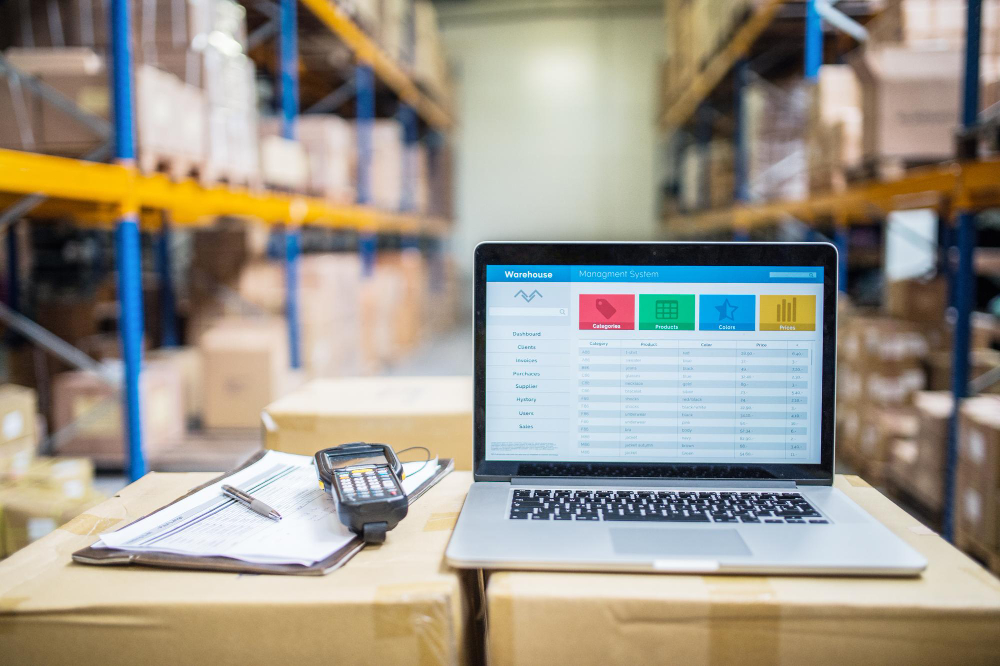
No more wandering around the warehouse with a list in hand - the system will show you exactly where the product is. This is not only convenient, but also saves time and space.
TMS systems - transport under control
The TMS (Transport Management System) facilitates route planning, fleet monitoring and the reduction of transport costs.
Want to know where your shipment is? The TMS will answer in seconds. And if you want to optimise your fuel costs - the system will suggest the shortest route itself.
SCM systems - whole supply chain management
SCM (Supply Chain Management) is a solution for companies that need complete control - from the ordering of raw materials to the delivery of the finished product to the customer.
SCM helps coordinate activities between different departments and partners - so that everything runs smoothly and the risk of delays is minimal.
CRM systems - customer relations are also logistics
CRM (Customer Relationship Management) is mainly associated with sales, but in logistics it has an equally important role. With CRM, orders can be handled better, queries can be responded to more quickly and long-term customer relationships can be built.
For logistics companies, it is a way to increase customer loyalty and improve service quality.
Systems for monitoring working time
Systems for measuring the performance of teams are also becoming increasingly popular. They help to plan shifts, monitor working time and draw conclusions about productivity.
This solution is particularly useful in warehouses and distribution centres, where every minute counts.
Why does a logistics company need a CRM system? And why does it really matter?

Such a system simply allows you to embrace everything about the customer. When did he last order? What did he order? Was he satisfied? Who from the company spoke to him? Instead of digging through emails or calling blindly - you have this at your fingertips.
And now specifically: NiceCRM is one of those tools that is ideal for logistics companies. It integrates with warehousing, transport, even e-commerce. When a customer asks where a package is - you don't have to fire up three systems to check.
In addition, it allows you to send automatic notifications (e.g. that a package has just moved), reminds you of follow-ups and even helps with pricing if you are operating on a large scale.
And the coolest thing - you don't need a week of training to understand it. It just works.
In practice? The client feels looked after, you have less chaos and the team can operate with peace of mind.
Recommended entry: Working in CRM - how do I get started?
What do you gain by implementing IT systems?

- Automation - less manual work, more „click” action.
- Greater efficiency - everything happens faster and more efficiently.
- Cost savings - better resource management = less expenditure.
- Improved customer service - the customer knows what is happening with his order.
- Transparency - you have a complete overview of what is happening in your company.
Logistics 4.0 and the digital warehouse - the new standard
In the age of e-commerce, the customer doesn't want to wait - the package has to be there tomorrow, preferably for free and with a return option. This is changing the way companies manage warehousing and transport.
Instead of Excel - modern WMS systems. Instead of pallets - cartons and automatic picking. This is what Logistics 4.0 - flexible, automated and ready for any shift.
In practice, it looks like this:
- The WMS itself suggests where to get the goods from and where to put them in order to be faster and more efficient.
- IoT sensors tell whether the doors in the container are closed and the temperature in the cold store is correct.
- Robots and automatic picking lines speed up packing - no mistakes and no coffee breaks.
- Integration with the TMS and ERP allows seamless management of the whole - from ordering to loading to final delivery.
All of this allows you to operate not only faster, but also more flexibly - to scale operations up or down, to adapt to seasonality, to handle multiple sales channels (omnichannel) without chaos.
Logistics 4.0 also means full visibility and real-time data - a manager doesn't have to call the warehouse to ask if a batch has already left. He has everything on his desktop - with charts, order status and alerts.
Importantly - this revolution is not just for the giants. More and more medium-sized and smaller companies are implementing digital tools because they simply... don't want to be left behind.
You may be interested in: Time management in the logistics department - do it effectively
What's next? The future of IT systems in logistics
More revolutions are already on the horizon:
- Internet of Things (IoT) - sensors in parcels and vehicles.
- Big Data - analysis of millions of data in real time.
- Blockchain - full transparency and security in the supply chain.
Everything is moving towards full automation and integration. For companies, this means even more control, lower costs and... less stress.
Summary
IT systems today are not an add-on, but the foundation of modern logistics. They make life easier for employees, improve the quality of services and allow companies to compete effectively. It is worth investing in technology - but it is equally important to choose it wisely and adapt it to the needs of your own company. Because even the best system will amount to nothing if it does not respond to real business challenges.
 Polish
  English