
Google page positioning - tips
Independent website placement in Google may seem like a challenge, but with the right approach it is most achievable. Knowing the basics of SEO and being able to adapt your website to the requirements of search engine algorithms is crucial. An effective strategy encompasses both technical optimisation of the site and activities related to content creation or link building. It is important to regularly monitor the effects of your actions and adapt them to changing trends. Below you will find practical tips to help you increase your website's visibility in search results.
Content is King - quality content is key to SEO

The role of valuable content on a website cannot be overstated. Google favours content that is unique, substantive and solves specific user problems. Before you do anything else, make sure your website offers content that will grab your visitors' attention and provide them with value.
Develop valuable content: Try not only to provide basic information, but also to explore topics in depth. Longer, more insightful content can attract more attention and engage users for longer periods of time. Remember that content doesn't necessarily have to be text - experiment with different formats such as video, infographics or podcasts.
Regardless of the format, content should be carefully crafted and provide value that sets your site apart. Remember that content is not just an SEO tool, but more importantly a way of building trust and user loyalty.
On-Page optimisation

An important element of successful SEO is the optimisation of elements on the website. This includes not only the skilful insertion of keywords, but also the alignment of titles, meta descriptions, headings and content with user intent.
In addition to skilful placement of keywords, it is worth paying attention to the structure of the content. Use headings and sub-headings (H2, H3, etc.) to make it easier for readers to navigate through the content and highlight key information. In addition, try to provide content that meets users' specific needs and answers their questions.
Content optimisation is also about ensuring readability and visual appeal. Well-composed articles with appropriately inserted graphics or other multimedia elements can attract more attention and encourage people to stay longer on the site.
Another important step when positioning a website yourself is to optimise the elements found on the website. This includes not only the skilful insertion of keywords, but also the adaptation of titles, meta descriptions, headings and content to user intent.
You may be interested in: Shopify positioning - our advice
Content optimisation: It is worth paying attention to the structure of your content. Use headings - H1, H2 and H3 - to make it easier for readers to navigate through the content and highlight key information. In addition, try to provide content that meets specific user needs and answers their questions.
Content optimisation also means ensuring readability and visual appeal. Properly written and optimised articles with appropriately inserted graphics or other multimedia elements can attract more attention and encourage people to stay on the site longer.
Content positioning tools - self optimisation
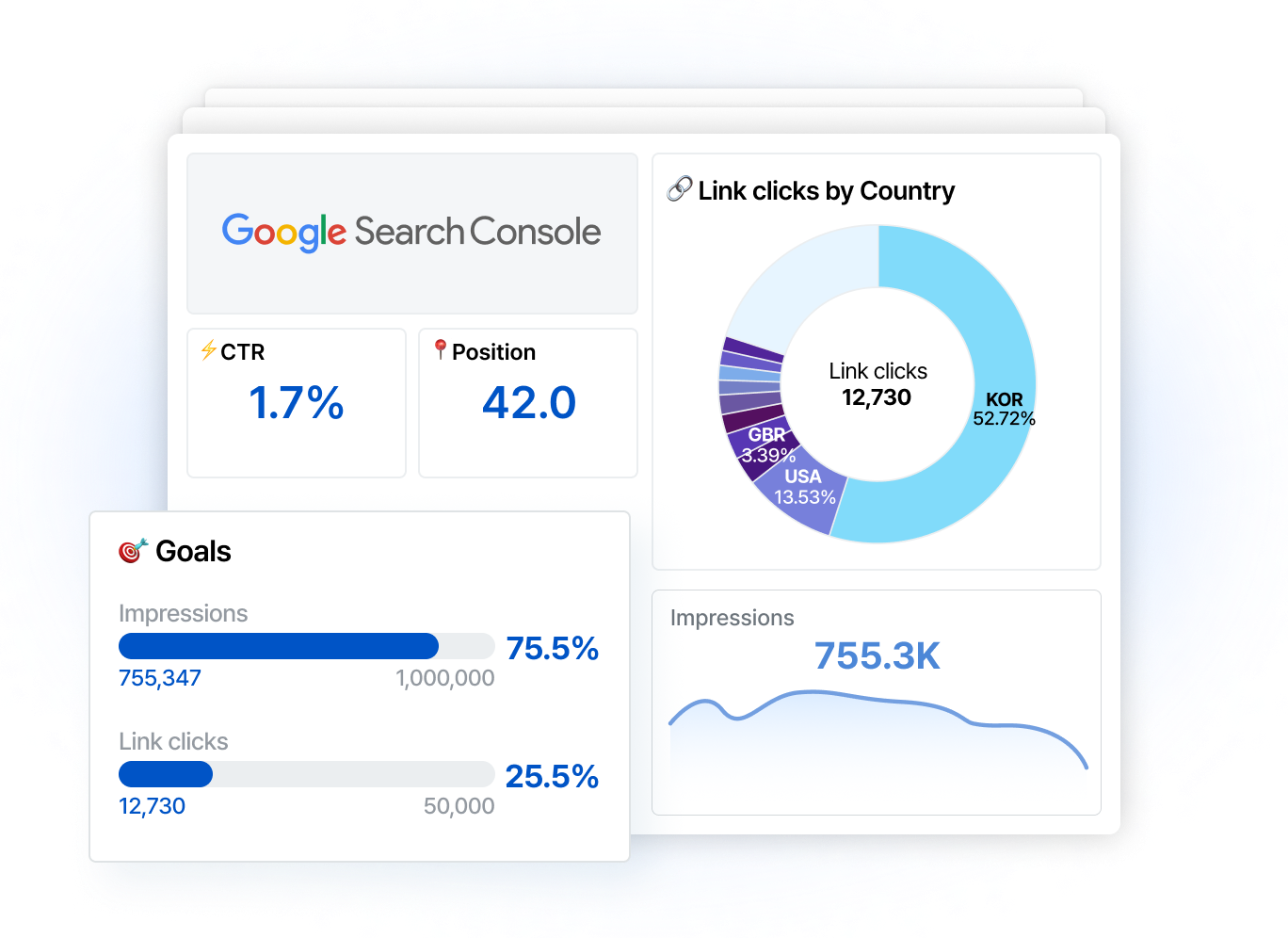
Here are some tools that can make the process of positioning and optimising a website significantly easier:
-
- Google Search Console
A basic and free tool from Google that allows you to monitor your site's indexing, analyse organic traffic and identify technical errors. Using GSC, you can upload XML site maps, check your site's performance on specific keywords and detect issues that may be lowering your site's search visibility. - Senuto
A Polish SEO tool that allows a comprehensive analysis of a website's search engine visibility. Senuto offers features such as keyword analysis, position monitoring, competitive analysis and report generation. The tool is particularly useful for identifying niche key phrases and developing a data-driven content strategy. - Ahrefs
One of the most advanced SEO tools on the market that focuses on backlink analysis, competitor research and keyword research. Ahrefs allows you to see what pages are linking to your site, what links your competitors have and what keyword phrases are generating traffic for them. With detailed link and keyword reports, you can build more effective link building and content optimisation strategies. - Yoast SEO
This is a popular WordPress plugin that helps optimise content and technical aspects of SEO. Yoast SEO allows you to optimise keyword placement, edit meta descriptions, create an XML site map and integrate with Google Search Console. - Rank Math
An alternative to Yoast SEO, offering greater flexibility in optimisation. Rank Math allows you to manage technical aspects of SEO, such as redirects, indexing or data structure, and provides advanced reporting on keyword positions. - Surfer SEO
A paid tool ideal for creating optimised content. Surfer SEO analyses the competition, suggests the right number of keywords and keyword phrases, and helps you adapt your content to the requirements of Google's algorithms. - ChatGPT
Support in generating content ideas, writing articles or drafting meta descriptions. ChatGPT can be helpful, but it is worth remembering to adapt and check the generated content for quality and SEO.
- Google Search Console
By using these tools appropriately, stand-alone SEO can be more effective and less time-consuming. Google Search Console, in combination with the other tools, provides a solid basis for monitoring and improving a site's performance.
Mobile-First Indexing
Traffic generated by mobile devices dominates the internet, Therefore, optimising a website for small screens is a key element of SEO. Users expect the site to work smoothly and provide a comfortable experience regardless of the device. Regularly testing the performance of the site on different smartphones and tablets helps ensure that all elements, such as buttons, menus and forms, are intuitive and easy to use. It is also important that the website is responsive, meaning that it automatically adjusts to the size of the screen, ensuring readability and full functionality.
Google takes the mobile-friendliness of a website into account when determining its position in search results, Therefore, taking care of this aspect affects both the user experience and the visibility of the website in the search engine. Responsiveness and seamless operation make a website more attractive to both the audience and Google's algorithms.
How do you check if your website is responsive?
- You can use any rwd online page emulator for this, which you can easily find in a Google search.
- An alternative solution could be a browser extension, such as Mobile Simulator.
Technical optimisation
For many people, this is the hardest part of SEO on your own. Just make sure your site runs smoothly and is easy for Google's robots to index. Here's what you need to keep in mind when you want to SEO your site yourself:
- Improve page load speed - use page performance testing tools such as PageSpeed Insights from Google;
- Removing technical errors - Google Search Console is best for this purpose; it is also worth regularly checking for 404 errors on the site;
- Ensure good navigation - understand the user's needs and be guided by UX principles when creating the site scheme;
- Optimise graphics - positioning yourself also requires you to compress the images on your website, use dedicated tools for this, such as Image Compressor;
- optimisation of HTML, CSS and JavaScript code;
- use of browser caching techniques.
These are key steps during technical optimisation.

The most common mistakes and how to avoid them
Positioning is a complicated process that carries the risk of making mistakes. Are you a beginner and just learning how to position a website yourself? Learn about the most common pitfalls to avoid them and achieve high positions in search results.
Over-optimisation of keywords
In the past, the technique of „keyword stuffing”, i.e. over-stuffing keywords in content, was popular, but is now severely penalised by Google. Too many keywords can harm your website, making the content unnatural and difficult to read. Instead, try to create valuable content that is understandable and useful to users, not just optimised for search engines.
Natural placement of keywords
Instead of stuffing keywords, place them naturally and contextually in your content. Focus on providing content that is valuable and useful to your readers, while maintaining proper SEO principles. Good SEO practice is about creating content that responds to user needs, not just manipulating rankings.
Lack of optimisation for mobile devices
Ignoring mobile users is one of the most common mistakes that can negatively affect search engine rankings. Google has for some time now been giving a premium to responsive websites, which are adapted to different devices and screen sizes. A website that does not work properly on smartphones or tablets not only has a lower chance of ranking well in the results, but also can discourage users and reduce conversions.
No testing on multiple devices
To avoid optimisation problems, regularly test your website on different mobile devices. Make sure all features work correctly on smartphones, tablets and across browsers. Check that elements are clear and easy to click on so that users have the best possible experience when using your site.
Unknowingly breaking Google's rules
Google has strict rules that must be adhered to in order not to expose your site to penalties and a drop in search engine rankings. Breaking the rules, even unknowingly, can result in sanctions that will lower your site's visibility. Always try to act in accordance with Google's guidelines and avoid trying to manipulate the algorithms. In the long run, an ethical approach to SEO yields better results.
Lack of SEO development
SEO is a dynamic field that is constantly changing. In order to avoid mistakes, it pays to keep up to date with the latest guidelines and trends. Regularly updating your SEO strategy, adapting to changes in Google's algorithms and learning new SEO techniques will help keep your site competitive in the long term.
No external linking
Backlinks, or links leading to your site from other sites, are of great importance for SEO. Their absence or improper construction can limit the potential of your site. Building a natural external link profile, by publishing valuable content and collaborating with other sites, is an essential part of a successful SEO strategy. However, avoid trying to artificially generate links, as Google may consider such actions as manipulation.
No internal linking
Internal linking is just as important as external links, and a lack of internal linking can negatively affect the structure of a site and its positioning. Internal linking helps Google to index content and prioritise the site. It also translates into better navigation and user experience, who will find material of interest more easily. Try to link to other relevant pages on your site, including older articles or products, to improve internal link flow and increase the time users spend on the site.

Building links to your website. Step by step
Building valuable links is a key part of an SEO strategy. Here is our step-by-step guide.
Competition analysis
Start with a thorough analysis of your competitors' sites. Identify where their links are coming from and what their sources are. This will help you find valuable places to build links. It's also worth looking at competing content and strategies to find out what works in your industry.
Understanding the competition: Identifying your competitors' link sources can provide valuable insights into potential link building partners and topics that are important in your industry. It's also a chance to identify weaknesses in your competitors that you can overtake in your results.
Creation of valuable content
Create content that is really worth sharing and linking to. This could be an article that solves a specific problem, a unique infographic, an interesting podcast or a guide. Try to provide value to your target audience. Content must be attractive, interesting and useful to your target audience. This will attract the attention of other sites and encourage them to link to you.
Quality over quantity: It's not just about the quantity of links, but more importantly the quality. One valuable link from an authoritative site can have more impact than dozens of weak links. Therefore, focus on creating content that provides value in itself.
Recommended article: Successful WordPress positioning - a guide
Link building
Link building can be carried out both organically and by using dedicated platforms. In addition to naturally gaining links through valuable content, consider buying links on trusted platforms such as WhitePress or Linkhouse. They allow you to reach out to verified subject sites that offer to publish articles with links to your site.
Cooperation with platforms: Platforms of this type make it easy to find sites that are relevant to your industry. Well-chosen links from such sites can significantly improve your link profile and help your SEO. However, remember to always choose quality sites that are relevant to your topic.
Outreach and relationship building
Contact other sites and bloggers in your industry. Introduce your content to them and offer to collaborate. Building relationships that can bring long-term benefits is a key part of a link building strategy.
Personalise your outreach: don't send mass messages to multiple recipients at once. Try to personalise your messages and show why your content is worth linking to. Building relationships based on mutual understanding and benefit is key.
Monitoring and maintenance
Regularly check the status of your links and remove those that are no longer valuable or pose a potential risk. Links that lead to your site can change over time. Therefore, it is important to keep a check on the quality of your links and regularly assess their value.
Regularly use link analysis tools, The tools available to you include Google Search Console and backlink monitoring tools. These will give you a complete picture of your link profile and enable you to react quickly to any problems. Remove links that lead to outdated or non-existent pages, as well as those from low-quality sites.
Link monitoring is also a way of detecting potential risks, such as unwanted backlinks (those that have been placed without your consent). If necessary, you can report these links for removal.

Summary
Featured article: Hosting for your domain - the key issues
 Polish
  English