The best sales platforms marketplace

Allegro - leader of Polish e-commerce
Allegro is the undisputed leader of the Polish e-commerce market. According to data from as many as 90% consumers is shopping on this very platform. The service attracts a huge number of shoppers - in 2023 it was more than 14.5 million active users.
Allegro features and benefits:
- Huge customer base - access to millions of active buyers.
- Extensive logistics - fast and convenient forms of delivery (Allegro One, Parcel Post, couriers).
- Secure payments - including PayU, BLIK, payment cards.
- Integration with OLX and Ceneo - increasing the reach and visibility of listings.
- Support for sellers - analytical tools, Allegro Ads, promotional programmes.
- Brand recognition - Allegro is the first place most Poles look when searching for products online.
Limitations and drawbacks:
Despite its huge advantages, Allegro also has its limitations. The most frequently cited disadvantages are high commissions, which reduce sellers' margins. A major challenge is also strong competition - Thousands of retailers offer the same or similar products, requiring investment in advertising and differentiating their offer.
In addition, selling on Allegro involves adhering to the platform's terms and conditions and complying with its rules - which, for some entrepreneurs, can be a constraint in building their own independent brand.
OLX
Key changes and features in 2025:
- From 12 May 2025, new OLX rules and regulations apply, including improved management of sales with consignments - sellers have more time to confirm shipments.
- OLX has introduced a “Pay if you sell” model. - ad impression fees charged only after a sale, with no upfront costs.
- The option of „OLX shipments” with InPost/Poczta Polska has been introduced, where the funds are deposited and the seller receives them after the buyer has confirmed delivery - increasing the security of the transaction.
Pros:
- No commission on sales - freemium model, ideal for occasional sellers and small businesses.
- Local and national announcements.
- Added features for paid mentions, promotions and ad packages.
Limitations and drawbacks:
- Not for large e-commerce - no advanced warehouse tools, e-invoicing, SEO, CRM, etc., no automation or integration.
- Sales are based on manual arrangements with the customer (delivery, payment).
- In selected categories (e.g. jobs, real estate, automotive), adverts are paid.
Empik Marketplace
Statistics and news:
- Empik Place (a.k.a. Empik Marketplace) is ranked among the top four e-commerce sites in Poland with monthly traffic of nearly 11-13 million visits.
- Empik Group ended 2024 with a GMV of PLN 4.2 billion (+15 % y/y); the marketplace accounts for around half of online sales.
- In December 2024, sales growth on Empik Marketplace was as high as 80 % year-on-year.
- Since January 2025, merchants have been served by Przelewy24 (Dotpay was isolated).
- New retailers benefit from the promotion: 0 % commission for 3 months + promotion package and Empik Premium to start.
Pros:
- Excellent visibility thanks to the Empik brand and huge traffic (35 million page views per month) .
- Integration of payment, shipping, advertising (Empik Ads), deliveries to Empik stores, premium programme and possibility to participate in promotional actions: Outlet, Design Zone, etc.
- Professional payment processing and security ~Empik is responsible for the entire transaction.
- Competition from vendors residing in the same category.
- Commissions outside the launch period to be included in the calculation.
- Concentrated assortment - particularly effective in categories such as culture, beauty or gifts.
Limitations and drawbacks:
Commissions - after the promotional period (0 %), rates are a significant cost to be included in margin calculations.
Competition within the same category - in order to differentiate the offer, retailers need to invest in advertising and attractive product presentation.
Concentrated assortment - the platform works particularly well in selected categories (culture, beauty, gifts), but sales can be more difficult in other segments.
Less universal** than Allegro - Empik Marketplace is more profiled, which limits reaching customers in niche product categories.
Erli
Speed of development:
- Erli closed 2024 with a GMV of approximately PLN 1.23 billion (+67 % y/y) and almost 6 million transactions (+66 % y/y).
- The platform is experiencing strong growth: net revenue +89 % in 2024, EBITDA also significant; some 30,000 retailers are active, with 35 million products.
- An intensive campaign, loyalty programme and development of the mobile app - already downloaded more than 2.2 million times; 54 % of sales are made through the app - is planned for 2025.
- It is a 100 % Polish platform with more than 5 million registered users.
Pros:
- Competitive, often lower commissions per vendor - no subscription, you only pay a commission.
- Full integration with tools such as IdoSell, BaseLinker, Sky-Shop - facilitated offer management.
- Marketing, loyalty and promotion programmes dedicated to retailers and buyers.
- Friendly sales environment and technical support - account manager, flexible start-up conditions .
Limitations and drawbacks:
- Still smaller in scope than Allegro and Empik - although growing rapidly, it is still only 2nd among Polish marketplaces.
- Need to set up Erlishop (subscription) to access full features - although the account itself is free.
OLX or other sales platforms in Poland - which is the best solution?
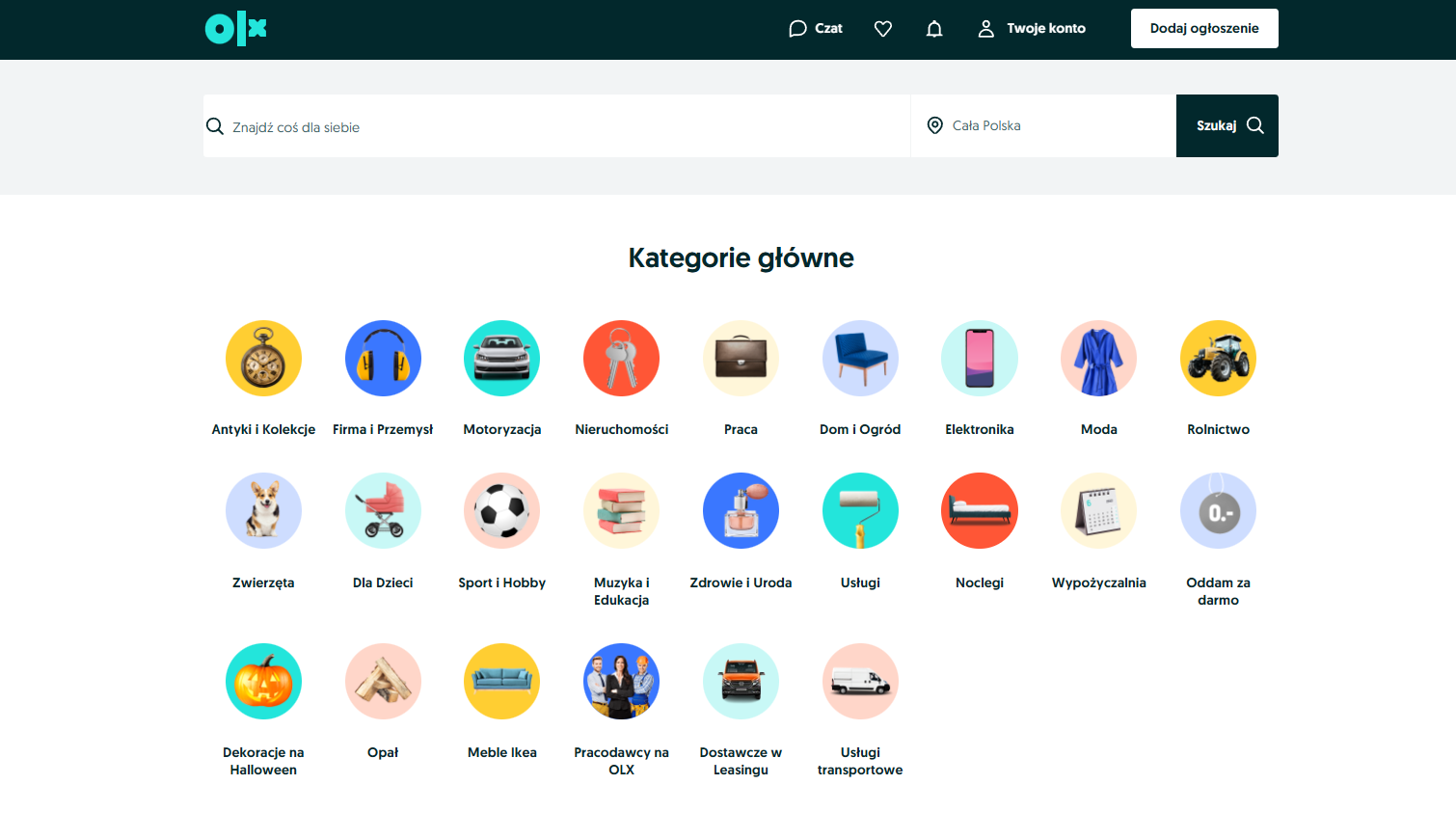
The main source of online sales should remain the company's own online shop, which can be developed and improved according to customer expectations, but external sales platforms, price comparison sites or real-time bidding will perfectly complement the trading network. It is certainly worthwhile to diversify your sales through several channels in order to better protect your company against the potential risk of failure on one of them or the sudden withdrawal of a platform from our country.
The users of Shopee, which tried to take the Polish e-commerce market by storm and then withdrew just as quickly, found out that such situations are possible. Therefore, in order to avoid a similar surprise, it is not worth becoming dependent on just one service and betting everything on one card, all the more so as the largest platforms may change their policies, regulations or raise sales fees above acceptable rates.
However, it is difficult to identify a one-size-fits-all solution and to state unequivocally which channel is best - For some, it is enough to sell on the Marketplace on Facebook or OLX at the beginning, while to start selling on a larger scale on your home market, you can bet on the Shoper, Shopify or Erli platforms. On the other hand, the parallel development of a website and the expansion of the possibilities of one's own online shop will allow selling on platforms that reach different user groups, less dependence on sales commissions or high account maintenance costs.
It is also worth considering Empik Marketplace - is a well-known brand with a high level of trust among consumers, offering a place for retailers from a variety of sectors, not just books and culture. With its well-established position and its own customer base, Empik is becoming an attractive alternative for companies that want to reach a loyal, informed buying group.
You can also use Erli - this e -commerce platform, which aims to connect sellers with buyers, is another interesting alternative to existing e-commerce solutions. Throwing down the gauntlet to trade giants such as Marketplace and Allegro, this Polish e-commerce platform is rapidly attracting sellers as well as buyers and is recording impressive growth rates.
When choosing the right platform, it is worth betting on those that will support us in terms of SEO and marketing, but also with an ever-growing reach that could potentially come in handy in the future.
| Platform | Coverage | Commissions / Fees | Features and integrations | Best for |
|---|---|---|---|---|
| OLX | Local + national | No commission; paid distinctions | „OLX shipments”, no automation | Beginners, small-scale, occasional sales |
| Empik Marketplace | 11-13 million visits per month | Three-month promotion, then commissions | Full service, advertising, collection in showrooms, security of transactions | Medium and large companies, lifestyle range, gifts |
| Erli | ~5 million registered, 35 million products | Commissions, optional subscription | API integrations, loyalty programmes, commercial support | Entrepreneurs looking for an alternative with low costs and Polish capital |
| Allegro | 14.5 million monthly shoppers, 90% Poles buy online | High commissions; paid Allegro Ads | Advanced logistics (Allegro One, parcel machines), integration with OLX and Ceneo, extensive advertising | Companies of all sizes; wide range of products, from general merchandise to professional sales |
Development of e-commerce in Poland. SaaS platforms - what is worth knowing?
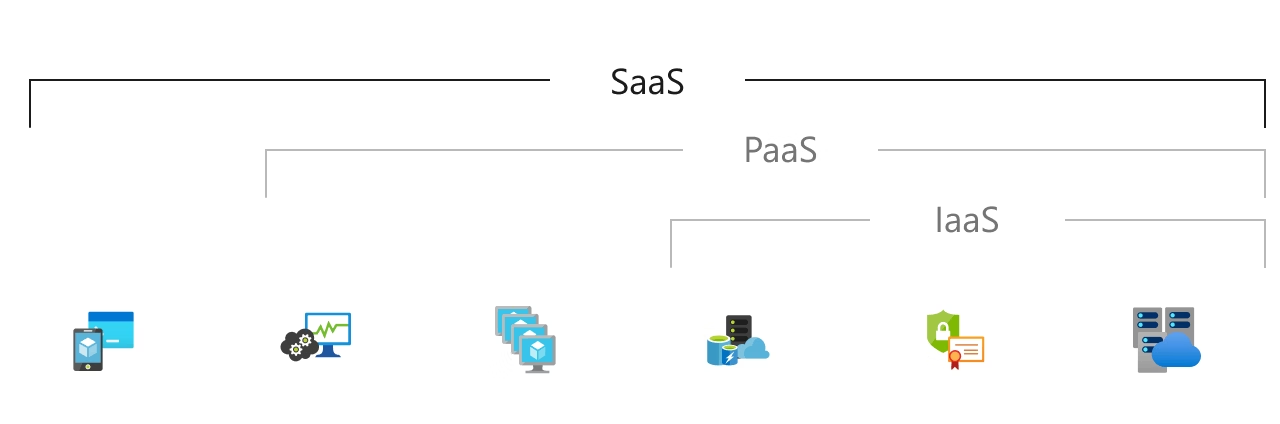
For those who want to build an independent shop and become independent of Allegro or other platforms, SaaS (Software as a Service) platforms are a great alternative. These are ready-made solutions in a subscription model, running in the cloud, ideal for start-ups and beyond. It is a clear and clearly defined cooperation option, in which we receive ready-made solutions, varying in terms of functionality and price depending on the chosen package, but in each version allowing active online sales. In this way, entrepreneurs do not have to face the costs of developing or purchasing software and installing it on their hardware, but benefit from a service that is periodically updated, improved and enhanced.
This is a huge advantage for small companies at the beginning of their e-commerce career, especially as the shop creation stage is intuitive and requires no programming skills. The platform offers a whole ecosystem of extensions and applications, thanks to which you can expand the functionalities of your own shop, manage content, product catalogue, track orders and sales results or integrate various forms of payment, which significantly facilitates the running of an online business.
It is possible to oversee this on your own, but with the cooperation of experienced agencies dealing with full-service sales, campaigns and advertising, basically anyone can get their online shop up and running fairly quickly and efficiently without having to spend a lot of time on it.
Advantages of SaaS:
- No programming required
- Ready-made templates and functionalities
- Intuitive shop builder
- Automatic updates and technical support
- Possibility of integration with payment systems, couriers and marketing tools
It is also worth noting the growing marketplace-type platforms. One example is Erli, which is rapidly gaining popularity as an alternative to Allegro. It focuses on building relationships between sellers and customers and offers favourable starting conditions.
Where to put your shop? An overview of the most popular SaaS platforms in 2025

Choosing the right sales platform is one of the key decisions facing both novice sellers and experienced e-entrepreneurs. The right platform not only makes it easier to manage sales, but also influences business scalability, customer experience and the effectiveness of marketing efforts.
Here is an overview of the most popular e-commerce platforms available on the Polish market in 2024:
1. Shopify
It is a global SaaS platform known for its ease of use and wide range of integrations. It offers pre-built templates, powerful analytics and international sales capabilities. Ideal for small and medium-sized businesses looking to get off the ground quickly.
2. PrestaShop
An open-source solution that provides great flexibility in customising the shop's functionality. Although it requires a little more technical knowledge, it is very popular with more advanced users.
3. Magento (Adobe Commerce)
It is an enterprise-class platform, dedicated to large shops with extensive offerings and a large number of customers. It offers full control over every aspect of the shop, but requires significant technical and financial resources.
4. WooCommerce
A WordPress plugin that allows you to quickly turn your blog or website into an online shop. Great for freelancers, small shops or digital creatives.
5. Shoper
Polish SaaS platform offering a full suite of online sales tools, including integrations with Allegro, courier and payment systems. Ideal for people who want to sell without involving a programmer.
6. SOTESHOP
A powerful all-in-one tool that allows you to run an online shop without installation or configuration. The platform offers Polish-language support and great flexibility.
7. BigCommerce
A solution for companies that expect advanced features while being easy to use. It is particularly valued by brands with ambitions to enter international markets.
8 Shopware
A system designed with user experience, scalability and modern design in mind. Increasingly chosen by shops that focus on growth and flexibility.
9. Wix eCommerce
A drag-and-drop platform known for its simplicity and quick implementation. Ideal for beginners and those who want to test online sales without a large investment.
10th Idosell
Advanced Polish platform aimed at professional sellers. Distinguished by strong omnichannel support, process automation and integrations with external systems (ERP, CRM).
Check also: Successful WordPress positioning - a guide
How much does it cost? Overview of payment models of e-commerce platforms
| Platform | Cost model | Comments |
|---|---|---|
| Shopify | Paid (subscription) | From approx. USD 25/month. + sales commissions; 14 test days free of charge |
| PrestaShop | Freemium | Engine free, but hosting and add-ons (modules) often payable |
| Magento | Paid (high cost) | Open-source version free, implementation and maintenance very expensive |
| WooCommerce | Freemium | Plugin free, but hosting, SSL, themes and add-ons can cost money |
| Shoper | Paid (subscription) | From approx. £69/month; includes hosting, support and updates |
| SOTESHOP | Paid (licence/subscription) | One-off payment or monthly subscription |
| BigCommerce | Paid (subscription) | From USD 29/month; scaled as shop grows |
| Shopware | Freemium / Paid | Free version + paid options (Professional, Enterprise) |
| Wix eCommerce | Paid (subscription) | From approx. USD 17/month for the sales option |
| Idosell | Paid (subscription + commission) | Cost dependent on shop turnover, entry fee |
You may be interested in: Positioning on Shopify - our advice
Free versus paid trading platform
-
If you are just starting out, it is worth considering freemium platforms (e.g. WooCommerce, PrestaShop) or those offering a trial version.
-
For companies planning to grow rapidly, Shoper, Idosell or Shopify, which offer full technical support and scalability, may be a better option.
Online sales platforms vs. integration with your own webshop - what should every online retailer know?

Depending on the product range offered, the number of products or the possibility of installing them on their own server, small and medium-sized enterprises can choose tailored plans and implement their offer with them in a refined, intuitive, error-free and constantly monitored environment. Nhe most popular e-commerce platforms offer a user-friendly interface that makes it easy to browse products, place orders and has payment support via DotPay, PayU or Przelewy24. This will certainly attract customers, while their confidence will be built by the protection of personal data and the guarantee of security of purchases.
Through the use of marketing tools and SEO, With the possibility of integrating with applications or sending invitations to customers, which the platform provides, medium and large companies can actively run their campaigns via the chosen platform, with full technical support and the certainty of stable operation of the subscription software.
Each platform attracts different strengths, but the choice of one can be preceded by an examination of the features offered and the costs of the services you are interested in. Sales and customisation of a marketplace platform is not difficult in itself, but it is clear that goods do not „sell themselves” and well-considered marketing strategies are required to direct customers to our sales channels.
If you need to launch your own online shop, we invite you to make use of our web shop development services! We will design and implement a shop on the platform of your choice.
 Polish
  English